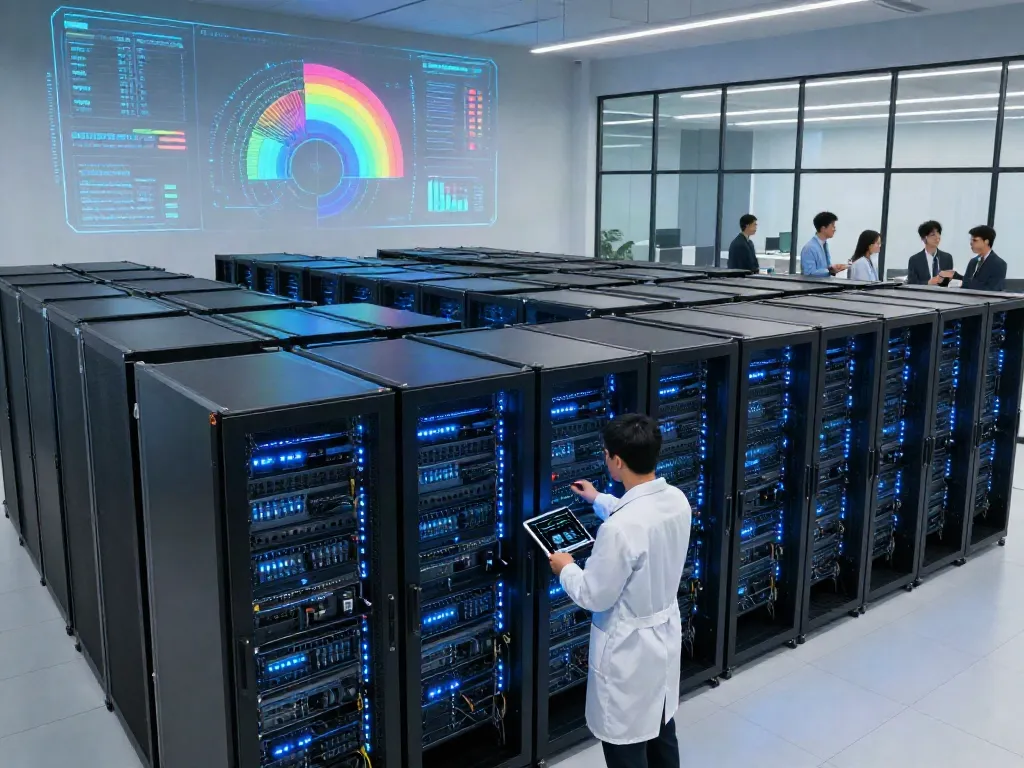
Understanding AI Data Centers and Their Importance
As technological advancements continue to reshape industries, AI data centers have emerged as a cornerstone in the infrastructure required to support sophisticated AI applications. Designed specifically to handle the high-performance needs of artificial intelligence, these data centers host the necessary computational power to train and deploy AI models effectively. The rapid growth of AI applications, alongside the increasing scale of AI workloads, has made a dedicated focus on energy efficiency and resource management essential within these facilities. When exploring options, AI data center solutions provide comprehensive insights into the interplay of power, computing, and operational efficiency in AI infrastructure.
What Defines an AI Data Center?
An AI data center is distinctly characterized by its architecture and operational goals tailored to meet the demands of artificial intelligence. Unlike traditional data centers that support a wide array of IT functions, AI data centers utilize high-density computing environments equipped primarily with Graphics Processing Units (GPUs). These GPUs are essential for their ability to handle parallel processing, which is crucial for running complex AI algorithms and deep learning models. The design also encompasses advanced cooling systems and efficient power supply management to sustain the continuous operation of these computationally intensive tasks.
How AI Data Centers Support Modern Applications
AI data centers are pivotal in enabling modern applications across various sectors, including healthcare, finance, and transportation. They provide the necessary backbone for AI workload processing, allowing organizations to perform large-scale data analysis and real-time decision-making. For instance, in healthcare, AI models can analyze medical images with unprecedented accuracy, aiding in diagnostics that are faster and more reliable than traditional methods. Furthermore, the adaptation of AI data centers to support edge computing allows for quicker processing of data generated from IoT devices, thereby enhancing responsiveness and service delivery.
The Role of Energy Efficiency in AI Operations
As the demand for AI grows, so does the energy consumption of AI data centers, leading to significant operational costs and environmental concerns. Energy efficiency has become a focal point, with many data centers implementing strategies such as the use of renewable energy sources and advanced cooling technologies to minimize their carbon footprint. Additionally, optimizing GPU utilization through workload scheduling can lead to reduced power consumption, thus contributing to both cost savings and sustainability efforts.
Factors to Consider When Choosing an AI Data Center
Selecting the right AI data center involves evaluating several critical factors that contribute to performance and operational effectiveness. Understanding these factors can provide organizations with a strategic advantage in the competitive landscape of AI development.
Performance Metrics: What to Look For
Performance metrics are vital indicators of a data center's capabilities. Key metrics include processing power (measured in tera-operations per second), latency, and throughput. It is essential to ensure that the performance metrics meet the specific requirements of the AI workloads you intend to deploy. Benchmarking tools and standardized tests can help organizations evaluate the performance of different data centers before making a decision.
Scalability and Flexibility in Infrastructure
As AI technologies evolve, scalability becomes a key consideration. Organizations must choose an AI data center that can grow alongside their needs. Flexibility in infrastructure allows for the seamless addition of resources, whether that means integrating new GPUs or enhancing data storage capabilities. This adaptability can save time and resources in the long run, ensuring that an organization can respond to changing demands swiftly.
Security Features Essential for AI Operations
Given the sensitive nature of the data processed in AI applications, robust security measures are paramount. Organizations should look for AI data centers that offer comprehensive security features, including physical security, data encryption, and regular security audits. Additionally, regulatory compliance with standards such as GDPR or HIPAA is crucial for businesses that handle personal or sensitive information.
Common Challenges and Misconceptions Around AI Data Centers
Despite the advancements in AI infrastructure, several common challenges and misconceptions persist, often hindering businesses from effectively leveraging AI data centers.
Debunking Myths About AI Data Center Costs
One prevalent myth is that AI data centers are prohibitively expensive to operate. While initial capital investment may be substantial, the long-term operational efficiencies and cost savings achieved through enhanced AI capabilities often justify the initial outlay. Organizations can also consider cloud-based solutions that offer flexibility in scaling up or down their usage based on needs, potentially lowering costs.
Understanding the Environmental Impact of AI Data Centers
Another common misconception is that AI data centers are inherently harmful to the environment. While it is true that they consume significant energy, many data centers are now designed with sustainability in mind, employing renewable energy sources and innovative cooling systems. By optimizing energy usage and contributing to sustainability efforts, these facilities can minimize their environmental impact.
Technological Limitations in Traditional Data Centers
Traditional data centers often struggle to meet the unique demands of AI workloads. Their reliance on CPUs limits the speed and efficiency with which they can process large datasets. In contrast, AI data centers equipped with GPUs are purpose-built to handle the parallel processing requirements of AI algorithms. This technological advantage is critical not only for performance but also for meeting the growing demands of AI applications.
Implementing AI Data Center Solutions
The transition to an AI-focused data center involves careful planning and execution. Organizations must assess their current infrastructure and strategize on how to implement AI capabilities successfully.
Steps to Transition to an AI Data Center
Transitioning to an AI data center requires a systematic approach:
- Assess Current Infrastructure: Review existing IT resources and identify gaps in performance.
- Identify AI Workload Requirements: Define the specific AI applications and workloads that will be deployed.
- Select Appropriate Technology: Choose hardware and software solutions tailored to AI processing needs.
- Plan for Scalability: Ensure that the new infrastructure can accommodate future growth.
- Implement Security Protocols: Establish robust security measures from the outset to protect sensitive data.
Best Practices for Optimizing AI Workloads
To maximize efficiency and performance in an AI data center, consider the following best practices:
- Utilize Containerization: Deploy applications in containers to streamline resource allocation and improve utilization.
- Implement Load Balancing: Distribute workloads evenly across resources to prevent bottlenecks.
- Monitor Performance Continuously: Regularly assess system performance to identify and resolve issues proactively.
Case Studies: Successful AI Data Center Implementations
Numerous organizations have successfully transitioned to AI data centers, achieving substantial benefits:
- Healthcare Provider: A leading hospital implemented AI analytics for patient data processing, reducing diagnosis time by 30% while increasing operational efficiency.
- Financial Institution: A major bank enhanced its fraud detection capabilities by deploying machine learning algorithms on a dedicated AI data center, resulting in a 40% decrease in fraudulent transactions.
Future Trends in AI Data Centers
As AI technologies evolve, so do the data centers that support them. Recognizing future trends is essential for organizations aiming to stay ahead in the competitive AI landscape.
Emerging Technologies Shaping AI Data Centers in 2026
Emerging technologies such as quantum computing and advanced AI understanding are expected to significantly impact AI data centers. Quantum computing, for example, holds the potential to revolutionize data processing speeds, thereby enabling the handling of more complex AI tasks.
The Impact of Renewable Energy on AI Infrastructure
As sustainability becomes an integral part of data center operations, the integration of renewable energy sources is anticipated to grow. AI data centers will likely lead the charge by not only consuming renewable energy but also by contributing to energy grids through excess power generation during non-peak hours.
Predictions for AI Data Center Growth and Development
The AI data center market is projected to expand rapidly, driven by increasing demand from various sectors. According to industry reports, by 2026, AI data centers are expected to represent a significant share of overall data center investments, marking a shift towards specialized infrastructure.
What Are the Key Considerations for Future-Proofing?
Future-proofing AI data centers will require a strategic approach to infrastructure design. Organizations must consider flexibility, scalability, and the integration of next-generation technologies as key factors in their planning.
How Will AI Data Centers Evolve Over the Next Decade?
Over the next decade, AI data centers are expected to become increasingly automated, leveraging AI tools for resource management and operational efficiency. Additionally, the convergence of AI with blockchain technology may lead to more secure and transparent operations in data handling.